
Gunpla weathering is one of the most satisfying skills you can add to your modelling toolkit — and it’s a lot more beginner-friendly than you might think. If you’ve already conquered panel lining, nub removal, and top coating, weathering is the natural next step to transform your Gunpla from a fresh-out-of-the-box showpiece into something that looks like it has actually survived a battlefield. Whether you’re going for light wear on a clean Zaku or full-on apocalyptic rust on a grunt-type suit, this guide will walk you through the key techniques, the tools you need, and some practical tips so you can start weathering with confidence.

What Is Gunpla Weathering (And Why Should You Try It)?
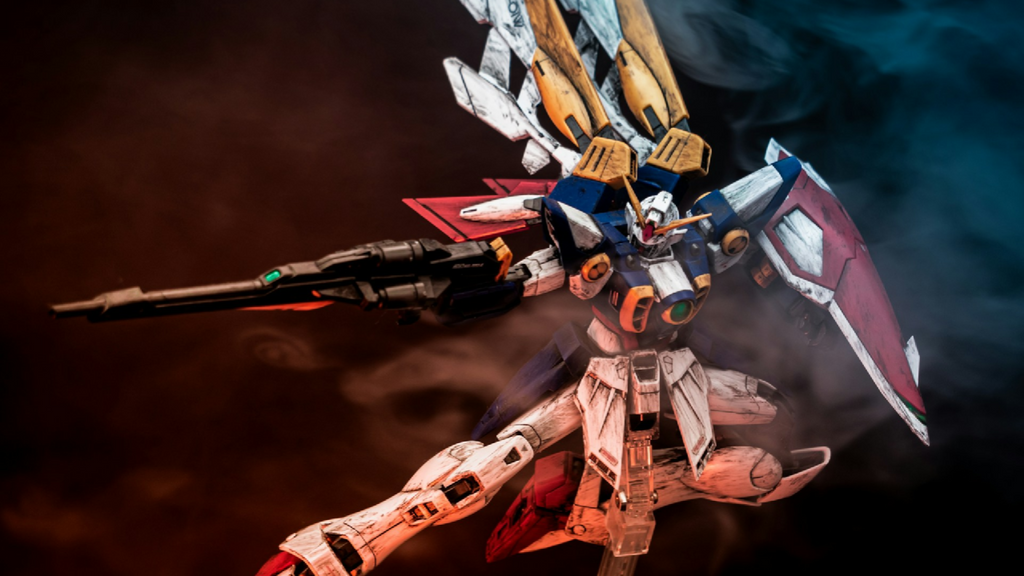
Weathering is the art of making your model look used, aged, and battle-tested. Real-world mobile suits — if they existed — would be battered by gunfire, scorched by beam weapons, caked in dirt from rough terrain, and streaked with hydraulic fluid and exhaust smoke. Weathering techniques simulate all of this on your model, giving it a sense of weight, history, and realism that a straight build simply cannot achieve.
Beyond just looking cool, weathering also has a practical benefit: it’s incredibly forgiving. Minor blemishes from painting, slightly uneven panel lines, or small seam lines can actually be obscured or complemented by weathering effects. In many cases, weathering makes your kit look better, not worse, even if your base build wasn’t perfect. It’s also a fantastic creative outlet — no two weathered kits ever look exactly alike, which means your finished model will be truly one-of-a-kind.
What You’ll Need: Essential Weathering Tools and Materials
You don’t need an expensive airbrush setup to start weathering. Many of the best beginner techniques rely on simple, affordable tools. Here’s a starter kit of everything you’ll want to have on hand before you begin:
- Gundam Real Touch Markers — perfect for quick and easy panel washing and general grime effects. Available individually or in sets.
- Tamiya Weathering Master Sets — small disc-format pastel pigments that come in different colour themes (rust, grime, snow, soot). Easy to apply with the included sponge brush. You can grab these directly from Gundam.my’s weathering pastel section.
- A makeup sponge or torn kitchen sponge — for chipping effects. Cheap, widely available, and surprisingly effective.
- A flat (matte) top coat — applied before weathering so pigments and pastels have a textured surface to grip onto. This step is non-negotiable.
- Old brushes — for dry brushing. Don’t use your best brushes; a worn, splayed brush actually works better for this technique.
- Silver or dark grey acrylic paint — for dry brushing edge scratches and chips.
- Isopropyl alcohol or lighter fluid — for blending and removing excess Gundam marker ink when doing panel washes.
Technique 1 — Panel Washing for Depth and Shadow
If you’ve already done basic panel lining with a Gundam panel liner marker, you’re already halfway to understanding panel washing. A panel wash is a thinned-down paint (usually enamel or acrylic) that you flow into panel lines and recessed details using capillary action — it naturally runs along the grooves all by itself. The result is deeper, more defined panel lines that look shadowed and three-dimensional rather than flat.
To do a simple panel wash, apply a thinned brown or dark grey enamel paint (or use a Gundam Real Touch Marker) over panel lines and let it settle. After it has dried enough to not run when touched, use a cotton bud or your finger moistened with lighter fluid or isopropyl alcohol to wipe away excess from the flat surfaces, leaving the wash only in the recesses. Work section by section so you don’t rush it. Always apply your matte top coat before panel washing, and you can apply a second thin matte top coat afterward to seal everything in.
Technique 2 — Dry Brushing for Edge Highlights and Wear Marks
Dry brushing is probably the single most popular weathering technique for a reason: it’s fast, forgiving, and the results look incredible on panel lines, edges, raised details, and mechanical joints. The idea is simple — you load a small amount of silver or metallic paint onto an old brush, then wipe almost all of it off on a piece of paper towel, leaving just a ghost of paint on the bristles. When you then drag or dab this nearly-dry brush across edges and raised surfaces, it deposits tiny streaks of paint that simulate scratched metal and worn paint.
Focus on the areas that would realistically see the most wear: knee joints, elbow joints, shoulder armour edges, the soles of the feet, the tips of claws and blades, and weapon barrels. Don’t apply too much — subtlety is your friend here. Less is always more with dry brushing, and you can always add more passes if you feel the effect isn’t strong enough. Keep a reference photo of a battle-worn vehicle or real-world military equipment handy to guide where the scratches should logically appear.

Technique 3 — Chipping with a Sponge
Paint chipping is the effect of paint peeling away from armour panels to reveal bare metal underneath. On a real mobile suit, this would happen where armour is struck by debris, scraped against obstacles, or simply worn down from constant use. To replicate this on your Gunpla, tear off a small piece of kitchen sponge or makeup sponge, dab it into a small amount of silver or dark grey paint on a palette, then blot most of it off on a paper towel before dabbing it lightly onto the armour surface.
The irregular, porous texture of the sponge naturally creates random-shaped marks that look convincingly like chipped paint. For more realism, do two layers — first chip with a dark grey to simulate the underlying metal colour, then chip with silver on top for the brightest highlights. Concentrate the chipping around areas that take the most punishment: forearms, shoulder edges, the front of thigh armour, and the soles of the feet. Avoid chipping dead-centre on large flat panels; real paint chipping happens most at edges and contact points.
Technique 4 — Pigments and Pastels for Dust, Dirt, and Rust
Tamiya Weathering Master sets are one of the best investments a beginner weatherer can make. These dry pastel-format pigments are easy to apply with the included sponge-tip brush: just pick up a little colour and dab or streak it onto the model surface. The Tamiya Set B (Snow, Soot, Rust) and Set C (Orange Rust, Gun Metal, Silver) are especially useful for giving ground-combat suits that dirt-and-grime look.
For dust on the feet and lower legs, use light tan or brown pigments and stipple them on with a soft brush, then lightly blow off the excess. For rust streaks down armour panels, use orange-rust pigment applied in downward streaks from joints or weapon mounts. For exhaust soot around thrusters and vents, use black or dark grey pigment dabbed on with a sponge. Remember — always apply your matte top coat before pigments so the rough surface helps the particles grip, and do not seal over pastels with another top coat, as this will flatten and kill the powdery effect.
Pro Tips Before You Start Weathering Your Gunpla
- Always top coat first. A flat/matte top coat gives the surface a tooth for weathering products to grip. Without it, pigments slide off and washes bead up.
- Start light — you can always add more. It’s much easier to build up weathering gradually than to try to remove it once you’ve gone overboard.
- Look at real references. Photos of real military vehicles, construction machinery, and worn metal tools are invaluable. Study where wear, rust, and dirt actually accumulate.
- Be consistent with the story. Decide if your suit is lightly used, heavily battled, or abandoned in a desert. Keep the weathering consistent with that narrative across the whole kit.
- Test on runners first. Before applying any weathering technique to your actual kit, test it on leftover plastic runners so you know exactly how the material looks and reacts.
- Build your kit in sub-assemblies. It’s much easier to weather individual parts (arms, legs, torso) before final assembly, so you can reach all the nooks and crannies.
Ready to Level Up Your Gunpla Builds?
Weathering is genuinely one of the most fun and rewarding skills in the Gunpla hobby — and once you try it, you’ll find it hard to build a kit without at least some weathering touches. Whether you’re reaching for Tamiya Weathering Master sets, Gundam Real Touch Markers, or experimenting with sponge chipping for the first time, the key is to jump in, test on runners, and let your creative instincts guide you. The battle-worn look is waiting for you on the other side.
At Gundam.my, we stock a full range of Tamiya Weathering Pastels, Gundam Marker sets, top coat sprays, and all the tools you need to take your Gunpla weathering skills to the next level. Browse our selection, and if you have questions about any product, our team is always happy to help — just drop us a message. Happy building, and may your kits always tell an epic story!